
To prove elder abuse in California, you must establish that abuse, neglect, or exploitation happened and identify the individual who committed it. California law (Welfare & Institutions Code § 15610.07) considers physical, emotional, or financial abuse, neglect, and abandonment as elder abuse. Proof differs according to the case type. Civil claims need a majority of the evidence or clear and persuasive evidence, but criminal suits demand proof beyond a reasonable doubt.
Strong evidence includes:
Medical documents and photographs showing injuries or negligence.
Witness statements from family members, staff, or other residents.
Financial papers that demonstrate asset exploitation or misuse.
Facility records and inspection reports.
Expert testimony from medical or financial professionals.
Get in touch with Fassonaki Law Firm, P.C. right now if you think a loved one is being abused in a nursing home. Under California’s elder protection laws, our California elder abuse lawyers will assist you in gathering information, constructing a strong case, and pursuing justice.
What is elder abuse in California, and its types?
Elder abuse, according to the EADACPA, is when someone 65 years of age or older is mistreated or neglected. It can happen in many places, such as assisted living facilities, nursing homes, and private residences. Family members, caregivers, medical professionals, or even strangers may commit the abuse.
Types of Elder Abuse
California seniors face multiple forms of mistreatment and nursing home abuse, including:
Physical Abuse: Any type of physical harm, including pushing, hitting, and improper use of restraints, is considered physical abuse.
Emotional Abuse: Verbal abuse, threats, intimidation, and seclusion are examples of emotional abuse.
Financial Abuse: It occurs when assets or property belonging to an elderly person are used or stolen without permission.
Any non-consensual sexual contact with an elderly person is considered sexual abuse.
Neglect: When essentials like food, shelter, or healthcare are not provided.
Medication Errors: It include giving the wrong doses, administering the wrong medications, or not providing the required medication.
Wrongful death in a nursing home: When a resident passes away too soon, it may give rise to a wrongful death lawsuit.
Elopement and wandering: Situations in which senior citizens, especially those suffering from cognitive impairments, depart a secure setting without supervision.
Abandonment: When someone in charge of an elderly person’s care deserts them.
Wheelchair transfer injuries: Falls, fractures, or other severe injuries brought on by carelessness or inappropriate handling when transferring elderly people to and from wheelchairss.
Choking death: Deaths that occur when elderly people, particularly those who have trouble swallowing, are not adequately watched over or helped during meals.
How Can Elder or Dependent Adult Abuse Be Proven?
These are the seven essential procedures and requirements for demonstrating elder abuse in California.
1. Determine whether the victim is an elderly person or a dependent adult.
In California, you must first prove that the victim is one of the following to file an elder abuse claim:
An elder is someone who is 65 years of age or older.
A dependent adult is a person between the ages of 18 and 64 who has mental or physical impairments that make it difficult for them to defend their rights or engage in daily activities.
2. Keep a record of the abuse and document the website
You must gather proof that the elderly person was harmed in order to establish that the abuse took place. This paperwork could consist of:
Medical records demonstrating neglect or injuries.
Pictures of accidents or dangerous living situations.
Financial documents that point to questionable transactions.
Witness accounts from relatives, caregivers, or medical professionals.
The victim’s personal narratives or journal entries.
3. Determine the Abuser and How They Are Associated with the Victim
The abuser’s identity and relationship to the elderly person must then be determined.
The perpetrator may be a:
Caregivers who are family members
Medical professional
A financial counselor
An outsider
4. Provide Evidence That the Neglect or Abusive Act Took Place
Depending on the kind of abuse, you may need to show that the elderly person was harmed by the abuser. This could include:
Statements from people who witnessed neglect or abuse.
Medical proof of physical harm.
Video footage or bank records demonstrating illicit transactions.
Expert testimony from financial or medical specialists.
5. Show Damages or Injury
You have to demonstrate that the abuse caused harm to the victim. Evidence of this damage could consist of:
Images of physical wounds
Documentation of monetary losses
Medical records demonstrating a deterioration in health brought on by neglect
Proof of the victim’s emotional distress, including their own statements
6. Exhibit Carelessness or Intent
In certain situations, you might have to provide evidence that the abuser behaved carelessly or purposefully. In cases of financial elder abuse, where it is necessary to prove that the abuser intentionally misappropriated the elderly person’s assets, this is especially crucial.
7. Speak with our Reputable Elder Abuse Lawyer
Our certified lawyer can assist you in obtaining the required proof, constructing a compelling argument, and assisting you with each stage of demonstrating elder abuse.
How Can I Report Elder Abuse in California?
Timely reporting protects the victim from reprisals and preserves evidence. If you suspect elderly abuse, take these initial steps:
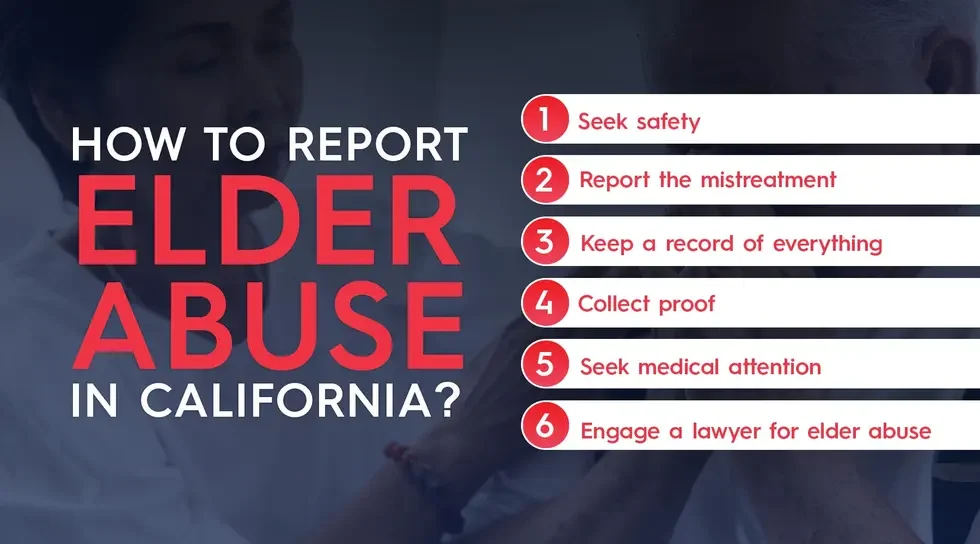
Seek safety: Dial 911 if the elderly person is at immediate risk.
Report the mistreatment: To report suspected abuse, get in touch with the local law enforcement agency or your county’s Adult Protective Services.
Keep a record of everything: Dates, times, and specific incidents should all be noted in your thorough documentation of any indications of abuse.
Collect proof: Gather any available supporting documentation, including financial records, medical reports, and photos.
Seek medical attention: Make sure the elderly person receives the appropriate medical care if there are indications of physical abuse or neglect.
Engage a lawyer for elder abuse: An attorney can explain how to prove elder abuse and help you understand your legal options.
You can count on a California elder abuse lawyer to fight for your loved one when you hire them.
What are the California Elder Abuse Victims’ Legal Options?
For victims of elder abuse and their families, the legal system provides a number of protections, such as conservatorships, restraining orders, and lawsuits.
1- Civil lawsuits
Victims may file an elder abuse civil lawsuit to recover damages brought on by the abuse. These may consist of:
Medical costs
Suffering and agony
Monetary losses
Certain family members have the right to sue the person or organization responsible for elder abuse if a loved one passes away as a result of it.
2- Criminal Indictments
The government may bring criminal charges against the abuser in extreme elder abuse cases. A criminal case can result in penalties for the abuser and help stop them from hurting others, even though it doesn’t directly compensate the victim.
3- Orders of Restraining
To shield themselves from additional harm, an elder abuse victim may request a restraining order. In situations involving emotional or physical abuse, this choice may be especially helpful.
4- Conservatorship
To safeguard an elderly person’s assets and welfare, their loved ones may occasionally create a conservatorship. For elderly individuals who are no longer capable of making their own decisions, this might be the best choice.
What is California’s Elder Abuse Statute of Limitations?
The period of time a victim has to bring a lawsuit following an injury or harm is known as the statute of limitations. This window of time is crucial when it comes to elder abuse because if a lawsuit is not filed within the allotted time, the right to file a lawsuit may be forfeited.
Statute of Limitations in Civil and Criminal Cases
In most civil elder abuse claims, victims have two years from the date of discovery to file under California’s statute of limitations (WIC § 15657.7).
I- Civil Statute of Limitations
The statute of limitations for elder abuse in California is normally two years from the date the abuse occurred or was discovered. This is true for civil cases, which usually entail seeking monetary compensation. This time frame may occasionally be prolonged if the abuser concealed the abuse or if the victim was not aware of it because of things like cognitive impairment.
Ii- Criminal Statute of Limitations:
Depending on the extent of the abuse, the statute of limitations varies in criminal cases where the state brings charges against the abuser. The statute of limitations for felonies involving elder abuse that involve severe physical harm or financial exploitation is typically three to six years.
What Constitutes Elder Abuse in California?
Under California Welfare and Institutions Code § 15610.07, elder abuse occurs when a person intentionally or negligently causes physical pain, emotional suffering, or financial harm to an individual aged 65 or older. This includes physical abuse, emotional or psychological abuse, financial exploitation, neglect, abandonment, and isolation.
In many cases, nursing home abuse also falls under this definition when facilities fail to provide proper care, leading to injuries, malnutrition, or unsafe living conditions. Whether it happens at home, in public, or within a care facility, any mistreatment that endangers an elder’s health or dignity is considered elder abuse in California.
How to Keep the Victim Safe and Avoid Retaliation?
Retaliation for reporting is prohibited under California Elder Abuse Law, protecting victims, witnesses, and facility staff who come forward. In cases of elder abuse, retaliation is a real concern, particularly when the alleged abuser is a family member, caregiver, or facility employee who has authority over the victim. You can, however, take advantage of certain safeguards if you fear repercussions against the victim or yourself.
Workers in assisted living facilities, nursing homes, and medical facilities who report suspected abuse are shielded from harassment, termination, or demotion. In a similar vein, witnesses who report incidents, such as friends or family, cannot be legally threatened or punished for doing so. If retaliation takes place, get in touch with an elder abuse lawyer. They will use this as proof against the offender and assist you in locating resources that will shield you from future retaliation.
Contact Fassonaki Law Firm, P.C., Today!
It’s time to act if an older adult has been injured. We seek justice for elder abuse victims at the Fassonaki Law Firm. By working together, we can defend the rights of older adults who are at risk and create a more secure and courteous environment for all California seniors. Why Put Your Trust in Us?
Because we will examine the information, determine how strong your case is, and suggest the best course of action.
Gather the most useful evidence to back up the assertion, then skillfully convey it.
Respond to court deadlines, turn in paperwork, and handle the frequently challenging legal processes associated with elder abuse cases.
Speak up for the victim’s rightful compensation.
If negotiations are unsuccessful, use their background and litigation abilities to make the case before a judge or jury.
Frequently Asked Questions
1- Is it possible to report elder abuse in California anonymously?
According to California’s laws against elder abuse, anyone can report suspected abuse to the California Department of Public Health, Adult Protective Services, or the Long-Term Care Ombudsman in confidence or anonymously.
2- What is California’s new elder abuse law?
Late in 2024, Assembly Bill No. 1417 was signed into law by Governor Gavin Newsom. AB 1417 modifies California’s mandatory reporting requirements for elder or dependent adult abuse that is suspected, confirmed, or known to occur in long-term care facilities.
3- What warning signs indicate elder abuse?
Physical indications of punishment or restraint, such as burns, scars, or bruises, or unexplained injuries. sentimental. Anxiety, depression, or behavioral shifts.